The Treatment of Cervicogenic Headache with Transcranial Direct Current Stimulation and Exercise Therapy: A Randomized Control Trial Evaluating Functional Outcomes. NeuroRehabilitation.
Kaiden Jobin, Ashley Smith, Christina Campbell, Siobhan Schabrun, Jean-Michel Galarneau, Kathryn J Schneider, Chantel T Debert , April 27, 2024
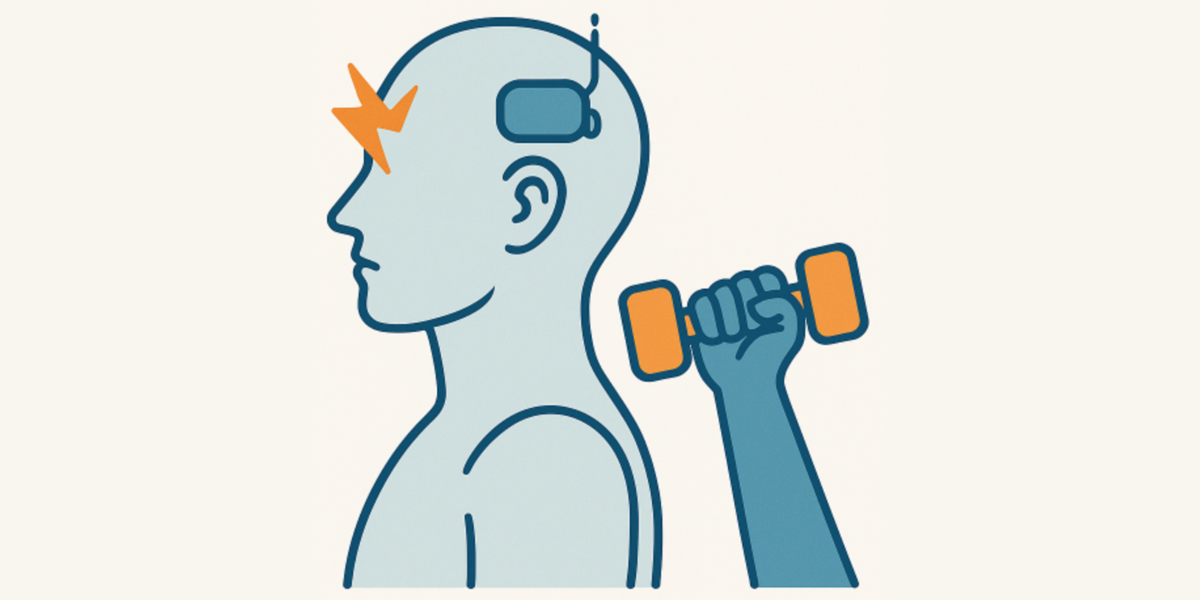
This study investigates whether combining transcranial direct current stimulation (tDCS) targeting the primary motor cortex with exercise therapy (ET) improves motor control and other cervical functional outcomes in individuals with chronic cervicogenic headaches (CGH), compared to sham tDCS combined with ET.
What did we learn?
Active tDCS combined with ET led to significant and sustained improvements in deep neck flexor motor control (measured by the craniocervical flexion test) lasting up to 12 weeks post-treatment compared to sham. Both active and sham groups showed significant improvements in cervical strength and muscle endurance, but no group differences were found in cervical range of motion. This suggests tDCS may enhance motor control benefits of ET, while ET alone improves strength and endurance.
Why is this relevant?
CGH is a disabling secondary headache linked to cervical spine dysfunction with limited effective long-term treatments. While exercise therapy offers some benefit, its effects are often short-term and modest. This study provides preliminary randomized controlled trial evidence supporting tDCS as a novel adjunct to exercise therapy to improve motor control in CGH, warranting further investigation in larger trials.
If you have questions or comments about this post, please email us at research@vivocura.ca
NOTE: This was written to help the reader become familiar with some of the research we are doing here at Vivo Cura Health. This post, and all other content on this website are not intended to be a substitute for medical advice, diagnosis, or treatment. Please consult with a certified healthcare provider to discuss if a treatment is right for you.